
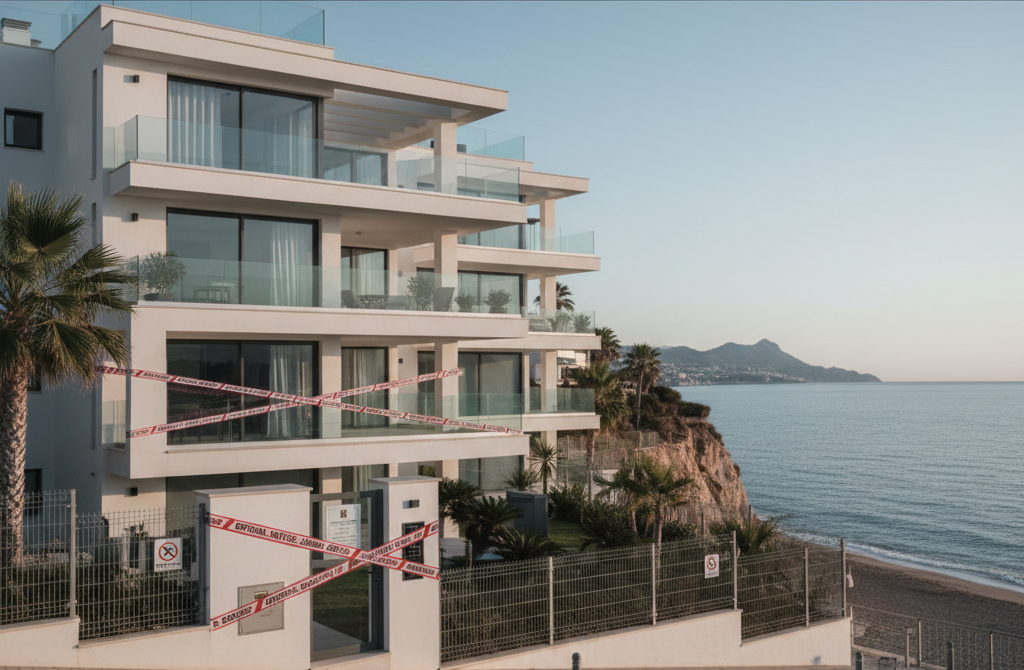
Investing in foreclosures (bank repossessions) and judicial assets (court-ordered auctions) in the Costa del Sol is often considered one of the most effective ways to build immediate equity in a high-demand luxury market.
Here is a brief breakdown of why these represent such strong opportunities:
1. Significant Discounts
The primary draw is the price point. Banks and courts are often motivated to liquidate assets to settle debts rather than hold out for the highest possible retail price.
Foreclosures: Typically offered at 20% to 40% below market value as banks look to clear their balance sheets.
Judicial Assets: Can sometimes be acquired for as little as 50% to 70% of the valuation if the property is not a primary residence and there are no competing bids.
2. Immediate Equity & Capital Growth
Because the Costa del Sol—specifically areas like Fuengirola, Marbella, Mijas, Benahavís, and Estepona—has a consistently rising market, buying below value provides “instant equity.” Investors can often renovate these properties and flip them for a significant profit or hold them as high-yield rentals.
3. Favorable Financing
Spanish banks are often more willing to offer aggressive financing terms (sometimes up to 80–100% Loan-to-Value) if you are purchasing a property that is already on their books as a repossession. This lowers the barrier to entry for many investors.
4. High Rental Demand
The region’s tourism stays strong year-round. An apartment acquired through a judicial auction in a prime location like Fuengirola, or Mijas can generate high yields from vacation rentals, often outperforming traditional “market price” investments.
Key Differences to Keep in Mind
| Feature | Bank Foreclosures | Judicial Assets (Auctions) |
| Source | Directly from a bank’s real estate portfolio. | Through the Spanish Court’s electronic portal (BOE). |
| Process | Similar to a standard sale, often faster. | Formal bidding process; requires a 5% deposit to enter. |
| Condition | Usually sold “as-is”; viewings are often possible. | Viewings are rarely possible; requires “blind” due diligence. |
| Complexity | Moderate; bank handles much of the paperwork. | High; requires specialized legal knowledge of court charges. |
Pro Tip: While the discounts are deep, “judicial assets” often come with hidden costs like unpaid community fees or back taxes. Always have a lawyer conduct a Nota Simple search and a full debt audit before placing a bid.